Tuesday, January 28, 2014

Close Reading: "Human" by Christina Perri


By closely reading the lyrics of the song "Human" by Christina Perri, I learned that people depend on others for guidance during our struggle to discover who we are. There are times when we choose to listen to people who will try to make us a person we are not, and that only makes our struggle greater. But we are also lucky enough to find someone who accepts us and will help us remember who we are (and be proud), so we sometimes listen to them. Eventually though, we have to make a decision that will affect the rest of our life.

The lyrics "I can fake a smile, I can force a laugh, I can dance and play the part," imply that the singer (who is representing a large portion of humanity) feels that she must hide who she is, since her real personality is apparently unacceptable to certain people. They have made her feel ashamed about some part of herself, and want her to be different. She has created a role for herself in which she is perfect, and it is a role that is acceptable and believable. Through the lyrics "I can do it, I'll get through it," she could be telling those people that she won't give up hiding, and is reassuring them that they have control over her.  She is being "a good machine," trying to prove herself as a child would. This is drilled into us from a young age, and then it's not those people telling her to be ashamed, it's herself. She starts to believe her alternate role is better than her real self.

Unlike "I can fake a smile, I can force a laugh, I can dance and play the part," the lyrics "Give you all I am," and "You build me up," imply that there is a constant person in her life who knows her, and accepts her. She's not afraid of them, so she can put herself out there when she's with them. They remind her who she is, and why she should be proud of that. So maybe the lyrics "But I'm only human, and I bleed when I fall down. I'm only human, and I crash and I break down," are her way of admitting that she is just like other people: flawed, confused, hurt, completely and utterly human. She is getting back to herself, and she "can do it" and "get through it" because of this person's reminders.

The hardest part of this is that these two things are mixed. The feeling of having to hide because we are worthless and the feeling that we are wonderful come at the same time, pulling us in two different directions. The lyrics "I can take so much, 'til I've had enough," mean that eventually we're going to stretch ourselves out if we don't choose how to think of ourselves and portray ourselves to others. At some point, we'll learn to accept our flaws and be happy (with minimal moments of doubt), or we'll let them take over, leading to depression, a feeling of failure, suicide, and things that will make our lives very bare, monotonous, and even shorter. We are the ones making the decision; the other people have played their parts, and we have to do this ourselves. I'm still waiting for my decision, and I think that I am very close to choosing happiness, despite having moments where I just want to give in to being someone else, the person society thinks I should be, the person I kind of want myself to be. But maybe this is all worth it, because it brings us closer to people, gives us a shared feeling of hope and love.

Tuesday, January 14, 2014

The Stolen Party

The Stolen Party by Lilian Hecker is about power and social status. The last sentence of the story, "As if the slightest change might shatter an infinitely delicate balance," refers to social classes, and how they are ordered based on money. Senora Ines, the mistress of a rich household, has just offered Rosaura, the maid's daughter, money for working at her daughter's birthday party (being of lower class, Rosaura had to earn that money, instead of receiving a present like the rich kids). Rosaura hesitates to take the money, since she had gone to the party thinking she was a guest, an equal, and was expecting a gift. They are both motionless now, unwilling to consent to the other and give up on their own ideas.

In this case, the money is a sign of weakness. Whoever takes the money will be giving the other power. If Rosaura chooses to take it, then she will be consenting to Senora Ines's belief that rich people are significantly better than lower and middle class people, and that gives Senora Ines the upper hand. If that happens, then Rosaura will be even lower than Senora Ines than she was before, because it will put her in her place, injure her pride, and prove Senora Ines right. It crushes her subtle dream of being accepted, and shows her just how different she is from rich people. If Senora Ines takes the money back, then she is consenting to Rosaura's notion that everyone is equal, no matter their financial circumstances, and that would give Rosaura the upper hand in their power struggle. This will have an even bigger impact, since it's not making the contrast between the two socially even greater, but it's taking that contrast and throwing it out the window. Senora Ines will have to think of Rosaura as someone just as good as her, someone who has equal opportunity. No matter what, there will be a status shift. The distance between the two will become so great that it snaps, or the barrier will be smashed.

This is an important issue in the real world too. A few years ago, protesters on Wall Street were fighting for economic equality. They thought that the rich shouldn't have an advantage over people in lower classes, that they shouldn't have things, especially money and praise, handed to them on a silver platter because they're rich. The ending of this  story helps the reader form an opinion. If they want Rosaura to take the money, they most likely think that rich people should be higher up and be given what they want. If they think that Senora Ines should take the money back, they most likely think that people should be equal, no matter how much money they have, or that they should have an equal chance of moving between the classes. All of this resistance, in the story and in our lives, shows that maybe non-rich people do have the power to change people being ranked by money.

Writing Challenge Post 4 - The Sadder Things in Life

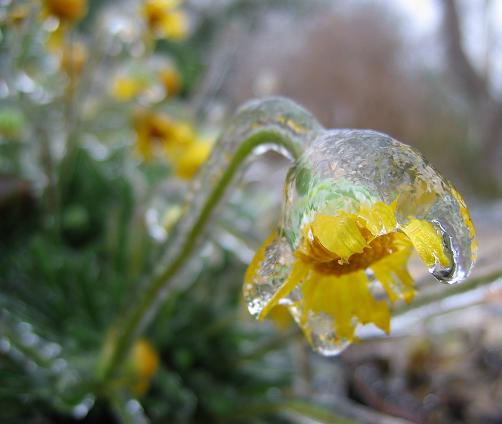
http://www.penick.net/digging/images/Ice_hymenoxys.JPG

Beautiful. Struggling. Alive. Brought to the surface in an era of hope.

This flower is stuck, and it will not change. Not until it is dying of the cold. Why does it have to suffer? It just happens, when there's so much beating down on it, and the cold comes and sucks away any warmth it still has in its worn and weak petals. It locks the flower in place and weighs it down. It's taunting, because it can see so much light and shininess outside of itself, but there is a barrier. See the face of the flower? It's uncovered, and looking from that angle, it would be hard to see that something was wrong. It looks healthy and vibrant, but just behind those petals, it's numb. Or maybe it's feeling so much that it's silently screaming from the pain. The pressure that's pushing it down, and the cold that's pulling it up to take away more of its life. It won't know which way to go, and it will lose everything.

Or maybe it is waiting for the ice to thaw. Then the flower can continue growing, feeling, blooming.  Nothing is holding it back once the ice melts. But it still has to look towards the sun. It can't drown itself in water. Because for all it knows, it will freeze again.


Sunday, January 12, 2014

Writing Challenge Post 3 - My California Palm Trees

0902131619.jpg

As a little kid, I always wanted to go to California. It seemed like a land full of warmth and fun and greatness. Over the summer, I got lost there. My family and I were driving from the Grand Canyon to Las Vegas, so we could fly back home to New York. But we were on the wrong road, and all of a sudden, we saw a sign that said, "Welcome to California!" After a lot of groaning and complaining from my father, who now had to drive an extra 90 miles, we kept going. I was so excited, looking out the window waiting for California, MY California, to show up. The one with famous people, glitzy restaurants full of happy, laughing customers, calm yet hectic beaches, palm trees. But I never saw it. No, it was desolate and dry, with lots of trucks and trains. But I still kept waiting, despite the fact that I knew it would never come. Because there were people, but they were all in cars going too fast to see if they were famous and laughing. And there was a lot of mountains and rocks and sand, but they weren't beaches. And there were palm trees, but they were sad and short and surrounded by weeds. So when I saw the sign that said, "Welcome to Nevada", I was disappointed. That had not been the California of my childhood dreams. But not even twenty yards away from the border, at a roadside market where we stopped to buy water and ice cream, there was a little cluster of palm trees, strong and tall, and soaking in the sunlight. And that was almost enough for me, those not-quite-California palm trees. Almost.

(Side note: I published this earlier, but Blogger wouldn't let me save any edits I made to it, so I just copied it into a new post)