Tuesday, January 28, 2014

Close Reading: "Human" by Christina Perri


By closely reading the lyrics of the song "Human" by Christina Perri, I learned that people depend on others for guidance during our struggle to discover who we are. There are times when we choose to listen to people who will try to make us a person we are not, and that only makes our struggle greater. But we are also lucky enough to find someone who accepts us and will help us remember who we are (and be proud), so we sometimes listen to them. Eventually though, we have to make a decision that will affect the rest of our life.

The lyrics "I can fake a smile, I can force a laugh, I can dance and play the part," imply that the singer (who is representing a large portion of humanity) feels that she must hide who she is, since her real personality is apparently unacceptable to certain people. They have made her feel ashamed about some part of herself, and want her to be different. She has created a role for herself in which she is perfect, and it is a role that is acceptable and believable. Through the lyrics "I can do it, I'll get through it," she could be telling those people that she won't give up hiding, and is reassuring them that they have control over her.  She is being "a good machine," trying to prove herself as a child would. This is drilled into us from a young age, and then it's not those people telling her to be ashamed, it's herself. She starts to believe her alternate role is better than her real self.

Unlike "I can fake a smile, I can force a laugh, I can dance and play the part," the lyrics "Give you all I am," and "You build me up," imply that there is a constant person in her life who knows her, and accepts her. She's not afraid of them, so she can put herself out there when she's with them. They remind her who she is, and why she should be proud of that. So maybe the lyrics "But I'm only human, and I bleed when I fall down. I'm only human, and I crash and I break down," are her way of admitting that she is just like other people: flawed, confused, hurt, completely and utterly human. She is getting back to herself, and she "can do it" and "get through it" because of this person's reminders.

The hardest part of this is that these two things are mixed. The feeling of having to hide because we are worthless and the feeling that we are wonderful come at the same time, pulling us in two different directions. The lyrics "I can take so much, 'til I've had enough," mean that eventually we're going to stretch ourselves out if we don't choose how to think of ourselves and portray ourselves to others. At some point, we'll learn to accept our flaws and be happy (with minimal moments of doubt), or we'll let them take over, leading to depression, a feeling of failure, suicide, and things that will make our lives very bare, monotonous, and even shorter. We are the ones making the decision; the other people have played their parts, and we have to do this ourselves. I'm still waiting for my decision, and I think that I am very close to choosing happiness, despite having moments where I just want to give in to being someone else, the person society thinks I should be, the person I kind of want myself to be. But maybe this is all worth it, because it brings us closer to people, gives us a shared feeling of hope and love.

Tuesday, January 14, 2014

The Stolen Party

The Stolen Party by Lilian Hecker is about power and social status. The last sentence of the story, "As if the slightest change might shatter an infinitely delicate balance," refers to social classes, and how they are ordered based on money. Senora Ines, the mistress of a rich household, has just offered Rosaura, the maid's daughter, money for working at her daughter's birthday party (being of lower class, Rosaura had to earn that money, instead of receiving a present like the rich kids). Rosaura hesitates to take the money, since she had gone to the party thinking she was a guest, an equal, and was expecting a gift. They are both motionless now, unwilling to consent to the other and give up on their own ideas.

In this case, the money is a sign of weakness. Whoever takes the money will be giving the other power. If Rosaura chooses to take it, then she will be consenting to Senora Ines's belief that rich people are significantly better than lower and middle class people, and that gives Senora Ines the upper hand. If that happens, then Rosaura will be even lower than Senora Ines than she was before, because it will put her in her place, injure her pride, and prove Senora Ines right. It crushes her subtle dream of being accepted, and shows her just how different she is from rich people. If Senora Ines takes the money back, then she is consenting to Rosaura's notion that everyone is equal, no matter their financial circumstances, and that would give Rosaura the upper hand in their power struggle. This will have an even bigger impact, since it's not making the contrast between the two socially even greater, but it's taking that contrast and throwing it out the window. Senora Ines will have to think of Rosaura as someone just as good as her, someone who has equal opportunity. No matter what, there will be a status shift. The distance between the two will become so great that it snaps, or the barrier will be smashed.

This is an important issue in the real world too. A few years ago, protesters on Wall Street were fighting for economic equality. They thought that the rich shouldn't have an advantage over people in lower classes, that they shouldn't have things, especially money and praise, handed to them on a silver platter because they're rich. The ending of this  story helps the reader form an opinion. If they want Rosaura to take the money, they most likely think that rich people should be higher up and be given what they want. If they think that Senora Ines should take the money back, they most likely think that people should be equal, no matter how much money they have, or that they should have an equal chance of moving between the classes. All of this resistance, in the story and in our lives, shows that maybe non-rich people do have the power to change people being ranked by money.

Writing Challenge Post 4 - The Sadder Things in Life

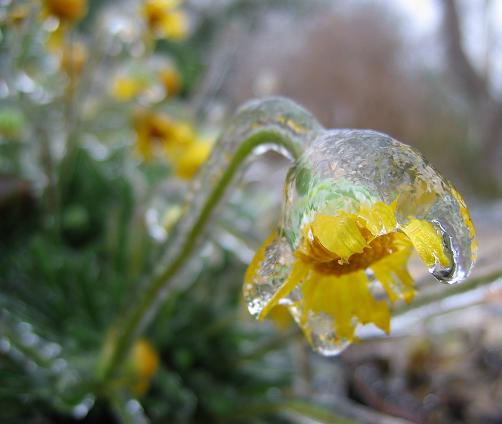
http://www.penick.net/digging/images/Ice_hymenoxys.JPG

Beautiful. Struggling. Alive. Brought to the surface in an era of hope.

This flower is stuck, and it will not change. Not until it is dying of the cold. Why does it have to suffer? It just happens, when there's so much beating down on it, and the cold comes and sucks away any warmth it still has in its worn and weak petals. It locks the flower in place and weighs it down. It's taunting, because it can see so much light and shininess outside of itself, but there is a barrier. See the face of the flower? It's uncovered, and looking from that angle, it would be hard to see that something was wrong. It looks healthy and vibrant, but just behind those petals, it's numb. Or maybe it's feeling so much that it's silently screaming from the pain. The pressure that's pushing it down, and the cold that's pulling it up to take away more of its life. It won't know which way to go, and it will lose everything.

Or maybe it is waiting for the ice to thaw. Then the flower can continue growing, feeling, blooming.  Nothing is holding it back once the ice melts. But it still has to look towards the sun. It can't drown itself in water. Because for all it knows, it will freeze again.


Sunday, January 12, 2014

Writing Challenge Post 3 - My California Palm Trees

0902131619.jpg

As a little kid, I always wanted to go to California. It seemed like a land full of warmth and fun and greatness. Over the summer, I got lost there. My family and I were driving from the Grand Canyon to Las Vegas, so we could fly back home to New York. But we were on the wrong road, and all of a sudden, we saw a sign that said, "Welcome to California!" After a lot of groaning and complaining from my father, who now had to drive an extra 90 miles, we kept going. I was so excited, looking out the window waiting for California, MY California, to show up. The one with famous people, glitzy restaurants full of happy, laughing customers, calm yet hectic beaches, palm trees. But I never saw it. No, it was desolate and dry, with lots of trucks and trains. But I still kept waiting, despite the fact that I knew it would never come. Because there were people, but they were all in cars going too fast to see if they were famous and laughing. And there was a lot of mountains and rocks and sand, but they weren't beaches. And there were palm trees, but they were sad and short and surrounded by weeds. So when I saw the sign that said, "Welcome to Nevada", I was disappointed. That had not been the California of my childhood dreams. But not even twenty yards away from the border, at a roadside market where we stopped to buy water and ice cream, there was a little cluster of palm trees, strong and tall, and soaking in the sunlight. And that was almost enough for me, those not-quite-California palm trees. Almost.

(Side note: I published this earlier, but Blogger wouldn't let me save any edits I made to it, so I just copied it into a new post)

Tuesday, November 26, 2013

Physical Appearance And Its Effect On Lifestyle

Physical appearance is the very first impression people get of someone else, whether they like it or not. Sometimes they're judged for it, sometimes they aren't, and sometimes they judge themselves because of it. They can think down on themselves, and never give themselves the happiness they deserve because they think they're ugly. Other times, people will get what they want because others think they are good-looking. And sometimes, physical appearance will be manipulated to change people's impressions or opinions. This judgement can affect how people live.

If people are ugly, or think they are ugly, they often don't have happy lives. They are insecure and think they don't deserve to be happy. One example of this is in Hero Type by Barry Lyga. The main character, Kevin ("Kross") is always saying he doesn't deserve to be thought of as a hero, because he's only an ugly, pimply teenager. Although he saved Leah Muldoon from a high-profile felon, he doesn't want to accept praise from anyone. He doesn't understand why everyone now looks up to him, and he resents their gratitude. And maybe, without even realizing it, he took the Army ribbons off of his new car and sparked a huge debate about freedom of speech, in which most people disagreed with his opinion, to get people off of his back with the kindness. He was wired to think that only the handsome or beautiful people can be successful and admired, which is unfortunately true sometimes.

Sometimes when people are good-looking, they get what they want because of it, and have easier lives. In Catching Fire by Suzanne Collins, when Finnick is first introduced to the readers, Katniss says that during his Games, he got many gifts from sponsors since he was so young, handsome, and charming, but many of the other, plainer tributes got nothing. Right from the start, the citizens of the Capitol were very attached to Finnick, almost like he was a pet. To them, this handsome boy from the run-down districts of Panem was better than the other tributes. The citizens of the Capitol wanted to do anything in their power to help him, and he deserved their help, but they gave it to him for the wrong reasons. They cared about him for something so vain and shallow as his appearance, and not who he was.

Since appearance can be so important, it's often manipulated to give off a certain message. In The Hunger Games by Suzanne Collins, Katniss's stylist, Cinna, carefully calculated and planned all of her outfits so that they would help her. During the tribute parade, he wanted her to look strong, bold, and brave, so he made an outfit that could be set on fire. It told the citizens of the country, specifically the sponsors, that she wanted to be noticed, because she had the potential to win the Games. After she won the Games, Cinna dressed her in a simple, sweet dress, with makeup that made her seem soft and girlish. She and Peeta had caused a rebellious spark in the Districts by attempting to commit suicide, which would leave no victor in the Games, so she needed to seem innocent, like she had put the nightlock berries in her mouth to save Peeta, who she supposedly loved, and not to start another rebellion. The Capitol may have hurt her and her loved ones otherwise. Cinna saw bodies and clothing as art, which has messages and emotions in it that will change how other people think, ultimately affecting the way they live and how they treat other people.

Physical appearance is not something taken lightly in our world. It can determine what we think of ourselves, and the kind of life we will let ourselves live. It will affect how other people treat us, and what they think of us, sometimes hurting us, sometimes helping us. There will be times that we want to change how we look, and sometimes we do, just so we and other people will view us with a different attitude. We care so much about first impressions, only sometimes getting new ones.

Thursday, November 21, 2013

Writing Challenge Post 2 - What the World Can't Take

Displaying 0828130930.jpg

This is a boy
climbing on a rock.
Trying to get to the top.
He always tries.

He tries
to be funny.
And he is.

He tries 

to make people happy.
And he does.

He tries
to do what is right.
And he can.

He tries
to make something of himself.
And he will.

Funny.
Happy.
Fair.

Successful.


This is what the world tries to be.
This is what the world can't take from me.

The world 

wants to be 
my brother.

Tuesday, November 12, 2013

Social Justice in My Elementary School

My old elementary school is what's known as an inclusion school. That means that general education and special education students were mixed in the classrooms. It was a wonderful place for me and everyone there, and I made a lot of friends, all with their own problems and difficult stories. But those things didn't matter to me, since we were taught not to judge people for their problems and disabilities, as other people often do.

People with disabilities and disorders are often judged. They are thought of as stupid, weird, and crazy, all because they can't do everything other people can do, or they do it differently. This is a stereotype, and stereotypes are wrong, depicting the subject in a crude, mean way. This leads to handicapped people being segregated from others, put into different classrooms, schools, or locations. They are shielded from the rest of society, and the people who do that to them believe they are doing what's right. But that just thickens a barrier that shouldn't have been created. It makes them feel disliked and insecure about something that makes them unique, even if it is an obstacle. My elementary school built a door in that barrier.

My school, The Children's School, accepted all types of kids. In every classroom, there were kids with IEPs and kids without IEPs, as well as three teachers: one general education, one special education, and one teaching assistant. We were taught by all three of the teachers. Instead of separating us, we were mixed together, and we had everything in one room. We talked and laughed and played with everyone, so we just thought of each other as regular kids, despite obvious differences in learning and social skills. We did activities such as reading books about kids with disabilities, and making Venn diagrams about how general education and special education kids were similar to and different from one another. Yes, there were times when fits were thrown and kids were taken out of the classroom, but the teachers told us why, and we didn't blame them for it. They didn't hide the fact that these kids were "different", but they made it something that we just knew and didn't judge.

This is how I wish it could always be - mixing all sorts of people, disabled or not, and understanding the differences without being narrow-minded and judgmental. Why draw a line when it isn't needed?

Monday, November 11, 2013

Writing Challenge Post 1 - Windows


When you look into a window from the outside, you see into something. You see the inside of a home or workplace, and you get a glimpse into someone's life, exactly what they are doing at that one moment in time. And maybe they will never be doing that one thing again, but it happened, and you were there, acknowledging their existence. And isn't that the tiniest bit special? Getting out of your own life to be in someone else's? 

Sometimes all you see is your reflection. But it's not the security of being insecure that you find in your bedroom mirror. You are
in public, among other people passing by, baring yourself to the world as much as you are hiding. No one notices you. You're still there, though. And you aren't focusing on your flaws, but looking at your reflection without judgement. It is shimmery and unclear like your soul. You just need to know that you exist. You want to feel important in a world that makes you so small. Let go of everything while it surrounds you. That is the best way to see yourself. 


And other times, you can't see anything. The window is high off the ground, and it has caught the light, but you are still squinting, squinting. Shielding your eyes from the sun,  trying to make out some shape or figure, but you can't see anything. So you walk away, not knowing what's on the other side of the glass. But you have to know. You NEED to. Your brain comes up with all sorts of ideas, until one sticks, because it is so perfect and wonderful that it MUST be real. Who would have thought that creativity could be thrown out the window, hoping to be caught.


Windows show you what is, and what could be.

Thursday, October 17, 2013

"'Sick-lit'? Evidently Young Adult Fiction is Too Complex for the Daily Mail" by Michelle Pauli

Michelle Pauli's response article to the Daily Mail's article "Sick-lit" claims that their opinion of young adult literature being too disturbing and dark is wrong. She says, unlike the Daily Mail's opinion, that the books, such as The Fault in Our Stars, are very moving, and sensitively deal with controversial issues such as terminal illness, depression, sex, and substance abuse.  Michelle Pauli says that young adult fiction writers care about their readers, knowing that what they write will affect them, and so they are sure to make their writing suitable for them. She also says that, unlike what the Daily Mail thinks, young adult fiction often is written to protect the readers, so they can explore the world and its issues in the safety of a story.

Michelle Pauli uses a lot of craft moves to push her idea. She gives her own opinion and tells the reader about her experiences with these books, such as The Fault in Our Stars. She references the Daily Mails's article in a negative light very often, arguing against many of their claims. She also quotes John Green, writer of The Fault in Our Stars, an author named James Dawson, and Kate Wilson, the managing director of publishing company Nosy Crow to back up her claim.


I agree with her opinion on how the books affect the readers. These books give readers insight into real-life problems, no matter how dark they are, but it's safe for them since it's always within the pages. It is, after all, a story, made-up plots and characters, which makes it better than teens learning about and dealing with these issues in the real world, but also helps prepare them should they encounter it there too.

Saturday, October 5, 2013

How I Live Now by Meg Rosoff

     Being Lonely


            Daisy from How I Live Now is an anorexic girl trying to deal with her family problems when she’s sent off to a war-torn England. When her father moves on from his dead wife and marries Davina, Daisy feels anger and resentment towards the two of them. This is because she feels unwanted in her new “family”. Her desire to feel loved and wanted leads her to doing things that are irrational, and perhaps to some readers, controversial.
            Daisy thinks that her father no longer cares about her and that her stepmother never has. Her mother died after giving birth to Daisy, so she also feels like it’s her fault that she died, and that her father is trying to break all ties with her mother, including her. When Davina enters the picture, Daisy resents her because, to her, she doesn't belong with her father since her mom wasn't supposed to die. But with her father occupied with Davina’s pregnancy, it’s clear that he has moved on from his dead wife and maybe has forgotten about his daughter, but Daisy just won’t be swayed. She is unwilling to accept that he has a new life with a new family.
            Daisy’s want for attention leads her to becoming anorexic. She told the reader towards the beginning of the story that she wanted to cause trouble for her father, but then she just wanted to be thin. But he still doesn't realize how lonely and unwanted she feels, so he just pays for a bunch of therapists and ships her off to England. Eventually she recovers when she realizes that wanting to be thin in a society whose main goal is now staying alive during a war is pointless. “All this time I've been starving, and without noticing I said it out loud, so Piper said So have I, and without even looking up I thought No you haven’t, not in the same way and I hope you never are.” (Pg 134) She realizes that starving isn't making her happy, it's making her feel even more hurt and alone, and she doesn't want anyone else to feel that way, just how I wouldn't want anyone else to feel as sad and insecure as I do sometimes. But also while in England, she falls in love with her cousin. I think the reason she lets the relationship progress further and further until they begin having sex, is because she likes the feeling of being loved, like there’s someone who wants to break her walls after years of building them up because she was ignored. Also, in her eyes, her father’s relationship with Davina is “forbidden”, so she’s kind of trying to spite him with one of her own. It’s a “how do you like that?” sort of thing, and although they obviously love each other, it’s still something readers might find strange and unacceptable.


            Daisy represents teens who feel lonely and uncared for. The ones who will hurt themselves because they feel like they deserve it or because it’s their only way to ask for help, for kindness. I've had those moments of doubt where my insecurities get the better of me. I’ll look in the mirror and it will show me someone ugly and annoying and weird, and it will tell me that no one really cares. And even though I don’t really have a reason to feel like that, it still makes me want to do something rash so people will finally understand that I’m a little vulnerable and sad sometimes. But then I remind myself that I don’t honestly feel that way. And that’s what Daisy does, reminds them that they’re going to stop feeling so alone and that they won’t feel the need to abuse themselves to find people who will care about them.